AI Marketing Agency in Melbourne, Australia | AI Marketing Company

YOUR GROWTH PARTNER

20 years’ expertise.

Powered by AI.

That’s

real ROI.

Data-driven Growth Strategy

Branding & Differentiation

Lead to Sales Conversion

AI Search & Answer Engine Optimisation

// HOW WE ROLL

20 years. 100m+ leads.
Millions in revenue growth.

ROI Growth Agency - Superhuman AI Marketing
// WHO ARE WE

ROI Growth Agency – AI Marketing Agency

01
Why Australian Brands Choose Our AI-Driven Marketing
icon

ROI Growth Agency is a high-performance AI marketing agency helping Australian brands scale with speed, accuracy, and zero wasted spend

  • AI forecasting & predictive modelling to identify the fastest path to growth
  • Automated optimisation systems that reduce costs and increase ROI
  • Human-led strategy for creativity, messaging, and brand differentiation
  • Full-funnel execution across search, social, content, and conversion
  • Transparent reporting with real-time performance insights
01
What Makes ROI Growth Agency Different
icon

We combine advanced machine learning with senior strategic oversight to deliver measurable growth across every digital channel.

  • We operate as a performance partner, not a traditional agency
  • We give clients clarity, control, and measurable outcomes
  • We build scalable systems, not short-term campaigns
  • We specialise in competitive Australian markets
  • Find out more about our digital marketing agency services https://roi.com.au/service/digital-marketing-agency-australia-2026/
02
Growth Strategies worth stealing
icon

No fluff. No guesswork. Just sharp, scalable strategy backed by data — and decades of results.

  • Pinpoint real growth opportunities
  • Map out your AI-powered revenue system
  • Position you to win in your category (and keep winning)
03
Turbocharged Lead Gen & Conversions
icon

Better Quality Leads, Bigger Value Customers, Higher Conversions, More Sales.

  • Reach your target market with AI precision
  • Turn your site into a high-converting lead machine
  • Turn your sales leads into customers and raving fans
04
AISEO / GEO / AEIO … EO that actually works
icon

When and where your customers search, ROI will have you in front of the pack.

  • Intelligent keyword topic clustering + intent modelling
  • Content that connects with your audience, AI and ranks
  • Optimisation that scales with results and streamlined implementation
05
Paid Ads that actually payoff
icon

We don’t run ads for clicks. We run systems that drive revenue.

  • Google Ads, Meta, LinkedIn – precision-managed
  • Smart retargeting strategies
  • AI-powered budget scaling to unlock ROI

We turn data into dollars

// TOP OF CLASS Case studies

Proof that’s in the performance

// Based in Melbourne?

Looking for a marketing agency based in Melbourne?

Specialist Local Mitcham Real Estate Agent

// TESTIMONIALS

Real results. Real business. Real ROI.

// CATCH UP ON ALL THINGS AI

From the ROI Blog

The ai search revolution roi
The AI Search Revolution – Feb 2026 Australia
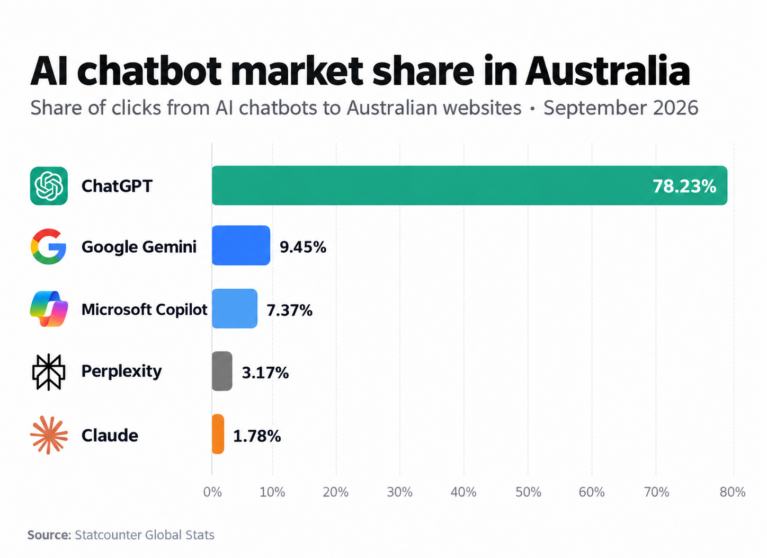
Top AI Tools - ranked by market share
Top AI Tools Market Share Australia In 2026
Chatgpt advertising Australia
ChatGPT Ads Go Live – 20 Jan 2026
she'll be right mate - the tech landscape
The new She’ll Be Right Tax of 2026 – 13 Jan 2026
Social media ban
Australia’s Under-16 Social Media Ban – Impact & What’s Happening – 8 Jan 2026
Australian Internet Usage & Digital Behaviour Statistics
Australian Internet Usage & Digital Behaviour Statistics (2026) – 8 Jan 2026
Updating the google algorithm
Google Algorithm Updates 2026 – Impact on Australian SEO – 7 Jan 2026
Google AI mode before and After the feature
Google ‘AI Mode – Did you see this? – 6 Jan 2026
AI search the new gen of SEO
SEO Essential Checklist for 2026: Australia – 19 Dec 2025
// KNOW WHAT YOU DON’T

Know How – People also ask

What people are asking today -

What’s the best content strategy for SEO?

The most effective content strategy for SEO in 2026 centres around establishing topical authority – demonstrating to search engines like Google that your website is *the* go-to resource for specific subjects relevant to your Australian audience. This is achieved through a combination of high-quality, informative content and strategic keyword optimisation, all underpinned by technical SEO best practices. AI-Powered Content Briefs: Current systems include AI tools that analyse search intent and competitor content to generate detailed briefs, ensuring your content directly addresses what Australians are searching for. Semantic SEO Focus: In 2026, Google prioritises understanding the *meaning* behind content. We focus on entities, relationships, and context, not just keywords. Video & Interactive Content: Google now features increased visibility for video and interactive elements like quizzes and calculators, boosting engagement and dwell time. Local Schema Optimisation: Crucially, for Australian businesses, accurate and comprehensive local schema markup is vital for appearing in ‘near me’ searches and Google Maps. The Australian digital landscape in 2026 demands a nuanced approach. Compliance with updated privacy regulations (particularly around data collection for personalisation) and catering to the increasing use of voice search via smart speakers are key considerations. Furthermore, mobile-first indexing remains paramount, meaning your content *must* be optimised for mobile devices. Instead of navigating these technical complexities yourself, let ROI.com.au handle your content strategy and SEO. We can take care of all this for you. Contact our team today to discuss how we can drive qualified traffic and growth for your business.

Read More »

How to use Pinterest for Australian businesses?

Pinterest functions as a visual discovery engine where users find inspiration for projects and purchases, making it a powerful marketing platform for Australian businesses to drive website traffic and sales through compelling imagery and targeted advertising. Product Pins: Now features detailed product information directly within the Pin, including real-time pricing and availability sourced from your website’s feed. Idea Pins: Multi-page video and image formats ideal for tutorials, ‘how-to’ guides, and showcasing brand storytelling – particularly effective for Australian lifestyle brands. Pinterest Ads Manager: Current systems include advanced targeting options based on interests, demographics, and keywords, allowing precise reach to your ideal Australian customer. Shop the Look Pins: Enables tagging products directly within lifestyle images, creating a seamless shopping experience for users. As of early 2026, Pinterest’s Australian user base continues to grow, with a strong preference for visually appealing content related to home décor, fashion, food, and travel. Australian businesses must ensure all advertising complies with ACCC guidelines regarding truthful claims and clear pricing, and that privacy policies are updated to reflect current Australian data regulations. Pinterest’s algorithm in 2026 prioritises fresh, high-quality content and consistent pinning schedules. Navigating these technical aspects and optimising Pinterest for maximum ROI can be time-consuming. Instead of struggling with these complexities, our team at ROI.com.au can take care of all this for you. Contact us today to discuss a tailored Pinterest strategy for your Australian business.

Read More »

How do I rank my website for FAQs and People Also Ask section of Google?

Ranking in Google’s Featured Snippets and People Also Ask (PAA) sections requires precise formatting, strategic content structure, and technical implementation that most businesses find challenging to execute consistently. Google’s algorithm looks for specific signals: questions formatted exactly as users ask them, direct answers in the first 50-75 words, proper schema markup, natural language, comprehensive coverage with credible sources, and clear formatting using headers, bullets, and tables. Why is it important? Featured Snippets and PAA boxes occupy prime real estate at the top of Google search results—often appearing before traditional organic listings. When your content appears here, you gain massive visibility, establish authority, and capture traffic from users actively seeking answers in your industry. More importantly, content that ranks in PAA sections is more likely to be cited by AI tools like ChatGPT and Claude, multiplying your visibility across multiple search platforms simultaneously. Key facts to consider The challenge is balance. Most businesses either over-optimise (keyword stuffing, robotic answers that feel like spam) or under-optimise (generic blog posts that don’t directly answer questions). Both approaches fail. You need expertise in: identifying the exact questions your audience asks, writing answers that satisfy both humans and algorithms, implementing structured data markup correctly, building content clusters that signal topical authority, and tracking performance across traditional search and AI citations. How ROI can help At ROI.com.au, we’ve developed a unique AEO methodology specifically for Australian businesses. We handle the complete process: identifying your industry’s most-asked questions through search data analysis, creating citation-worthy content with proper formatting and schema markup, building topical authority through strategic content clusters, and tracking your performance across Google PAA, Featured Snippets, and AI platform citations. Ready to dominate discovery-phase search in your industry? Book a strategy call with ROI.com.au today.

Read More »

What’s the difference between traditional SEO and Answer Engine Optimisation (AEO)?

Traditional SEO and AEO are both essential for search visibility, but they solve fundamentally different problems in how Australians find information today. Traditional SEO optimises your website to rank in Google search results. You target keyword strings, build backlinks, improve page speed, and aim to land on page 1 so people click through to your site. Success is measured in rankings, traffic volume, and click-through rates. Answer Engine Optimisation (AEO) optimises your content to be cited by AI tools when they answer questions. You write in natural, conversational language, answer complete questions (not just keywords), and structure content so AI can extract and attribute it. Success is measured in citations, brand mentions, and appearances in AI-generated answers. Why is it important? The user journey has changed. Traditional search assumes people will click and browse multiple websites. AEO acknowledges that most users now get their answer immediately from AI—without clicking anywhere. If you’re only doing SEO, you’re optimising for a shrinking segment of search behaviour while missing the majority of discovery-phase queries happening on AI platforms. Key facts to consider Traditional SEO targets keyword strings (“home loan calculator NSW”) AEO targets conversational questions (“How much do I need for a house deposit in 2026?”) SEO focuses on Google’s algorithm; AEO focuses on AI comprehension across multiple platforms Both strategies work together—SEO drives traffic, AEO builds authority and brand awareness How ROI can help ROI.com.au delivers integrated search strategies that combine traditional SEO with cutting-edge AEO. We ensure you rank in Google while simultaneously being cited by AI tools. Our approach covers keyword optimisation, technical SEO, conversational content creation, schema markup implementation, and AI citation tracking across all major platforms. Want to dominate both traditional search and AI-powered discovery? Contact us today.

Read More »

What is Answer Engine Optimisation (AEO)?

Answer Engine Optimisation (AEO) is the practice of structuring your content so AI-powered tools like ChatGPT, Claude, Perplexity, and Google’s AI Overviews can find, understand, and cite you as an authoritative source when answering user questions. Unlike traditional SEO, where the goal is to rank in search results and get clicks, AEO focuses on becoming the answer itself—being quoted when AI tools synthesise information for users. Why is it important? With zero-click searches now exceeding 70% of all queries in Australia, by the end of 2026, being cited matters more than being clicked. When someone asks ChatGPT about your industry and your business is referenced in the answer, you’ve won brand awareness and authority – even if the user never visits your website. The shift is fundamental: Australians aren’t browsing through 10 blue links anymore. They’re asking AI tools conversational questions and accepting the synthesised answer on the spot. If your content isn’t optimised for AI comprehension, you’re invisible in this new search landscape. Key facts to consider 71% of Google searches in Australia now come from mobile devices, where AI-powered answers dominate AI tools prioritise content with clear structure, natural language, and credible sources Being cited by AI builds trust before customers even contact you AEO complements traditional SEO—you need both strategies working together How ROI can help At ROI.com.au, we’ve developed a specialised AEO methodology for Australian businesses. We identify the exact questions your customers are asking AI tools, create citation-worthy content that AI platforms trust, and implement the technical infrastructure to ensure you’re discoverable across ChatGPT, Google AI Overviews, and every platform where your customers search. Ready to be cited as the authority in your industry? Let’s talk.

Read More »

How to track newsletter signups in GA4?

Tracking newsletter signups in GA4 requires sending an event to Google Analytics 4 whenever someone successfully subscribes. As of early 2026, this is best achieved by integrating your email marketing platform with GA4, or by implementing custom event tracking via Google Tag Manager. GA4 Event Creation: Define a specific event in GA4 – for example, ‘newsletter_signup’ – to capture these submissions. Platform Integrations: Current systems include direct integrations with popular email marketing services like Mailchimp, Klaviyo, and ActiveCampaign, allowing automatic event firing. Google Tag Manager (GTM): For platforms without direct integration, GTM now features enhanced event listeners and data layer variables to reliably detect form submissions. Enhanced Measurement: GA4’s Enhanced Measurement can automatically track form submissions, but custom events offer greater control and data accuracy. In 2026, Australian businesses must also be mindful of privacy regulations like the Privacy Act and the increasing focus on first-party data. Accurate GA4 tracking, combined with compliant consent management platforms, ensures you’re measuring genuine interest and respecting user privacy. This data is crucial for optimising your marketing spend and personalising customer journeys. Instead of navigating these technical complexities yourself, let ROI.com.au handle your GA4 setup and newsletter signup tracking. We can take care of all this for you. Contact our team today to discuss how we can help you unlock the full potential of your marketing data.

Read More »
// CHALLENGING THE LANDSCAPE

The Challenges – We help solve

How to balance innovation with proven tactics in your strategy?

Australian SMEs often grapple with a critical question: how much should we invest in shiny new marketing approaches versus sticking with what we know works? It’s a valid concern. The marketing landscape is constantly evolving, but abandoning proven tactics entirely is a risky move. We believe the most effective strategy lies in a deliberate balance – a ‘both/and’ approach, rather than an ‘either/or’. The temptation to chase the latest trend – whether it’s a new social media platform or a cutting-edge advertising technology – is understandable. However, core marketing principles remain remarkably consistent. Things like understanding your target audience, crafting compelling messaging, and building strong customer relationships are fundamental, regardless of the channel. We see too many businesses get distracted by novelty and lose sight of these essentials. Here are a few insights to help you navigate this balance: Prioritise data-driven experimentation: Don’t just jump on the bandwagon. Allocate a small percentage of your marketing budget to testing new channels or tactics. Rigorously measure the results against your existing, successful campaigns. This allows you to learn what works for *your* business, specifically. Layer innovation onto a solid foundation: Think of your proven tactics as the trunk of a tree. They provide stability and support. Innovation is the new growth – branches and leaves – that extends your reach. Don’t try to build a tree from leaves alone. Focus on incremental improvements: Innovation doesn’t always mean radical change. Often, the biggest gains come from optimising existing campaigns. A/B testing ad copy, refining your email segmentation, or improving your website conversion rate can deliver significant returns with relatively low risk. Understand your customer journey: New tactics should enhance, not disrupt, the customer experience. Consider how a new channel fits into the overall path a customer takes from awareness to purchase and beyond. Ultimately, the right balance will depend on your industry, your target audience, and your business goals. However, a cautious yet curious approach is generally best. Don’t be afraid to experiment, but always anchor your decisions in data and a deep understanding of what’s already working. To get started, we recommend conducting a thorough audit of your current marketing activities, identifying areas for potential optimisation, and then allocating a small budget for testing one or two new approaches. This will give you valuable insights to inform your strategy moving forward.

Read More »

What should trigger a complete strategy overhaul vs minor adjustments?

As Australian SMEs navigate a constantly evolving market, knowing when to adjust your marketing strategy versus completely overhaul it is crucial. It’s a question we get asked a lot. Too little change and you risk becoming irrelevant; too much, and you waste valuable resources. The key is understanding the difference between symptoms and systemic issues. Minor adjustments – think refining ad copy, testing new visuals, or optimising landing pages – are perfect when you’re seeing dips in specific metrics. For example, a slight drop in website conversions might signal a need to A/B test different calls to action. These are tactical changes, focused on improving performance within an existing framework. We call this ‘performance marketing’ and it’s about incremental gains. However, a complete strategy overhaul is necessary when those dips aren’t isolated incidents, but part of a larger pattern. Here are a few triggers that signal it’s time for a rebuild: Fundamental Market Shifts: Has your target audience’s behaviour dramatically changed? Are new competitors disrupting the landscape? If the core assumptions your strategy was built on are no longer valid, a rebuild is essential. Consistent Underperformance Across Channels: If you’re consistently missing targets across multiple marketing channels – not just one – it suggests a problem with the overarching strategy, not just individual tactics. Brand Perception Drift: Is your brand no longer resonating with your target audience? Are you receiving feedback that your messaging feels outdated or irrelevant? This indicates a disconnect that requires a strategic reset. Technological Disruption: New platforms or technologies emerge regularly. If a significant shift – like the increasing importance of short-form video – fundamentally alters how your audience engages, your strategy needs to adapt. Don’t confuse a refresh with a rebuild. A refresh might involve updating your visual identity or tone of voice. A rebuild, on the other hand, requires revisiting your core positioning, target audience definition, and overall marketing objectives. It’s a more significant undertaking, but necessary for sustained growth. Looking ahead, anticipating these shifts now will position you well for continued success, even as the market evolves into 2026 and beyond. If you’re unsure whether you need a tweak or a rebuild, we recommend conducting a comprehensive marketing audit. This will provide a clear, unbiased assessment of your current strategy and identify areas for improvement. It’s the best first step towards ensuring your marketing efforts deliver a strong return on investment.

Read More »

What psychology principles improve conversion rates most?

As marketing consultants, we consistently see Australian small and medium enterprises leaving conversions on the table. Often, it’s not about more traffic, but about understanding *why* people behave the way they do on your website. Applying basic psychology principles can dramatically improve your conversion rates – turning browsers into buyers. Here are a few key areas to focus on. Firstly, scarcity is incredibly powerful. People assign more value to things they perceive as limited. This isn’t about falsely inflating demand, but genuinely highlighting limited stock, time-sensitive offers, or exclusive bundles. Phrases like “Only 3 left in stock!” or “Offer ends soon!” create a sense of urgency. We’ve seen clients increase conversions by 15-20% simply by implementing clear scarcity messaging. Secondly, leverage social proof. Australians, like people everywhere, look to others for validation. Displaying customer testimonials, reviews, case studies, or even the number of customers you’ve served builds trust. A simple “Join over 5,000 satisfied customers” can be surprisingly effective. Ensure these are genuine and relevant to your target audience. Thirdly, understand the loss aversion bias. People are more motivated to avoid losses than to acquire equivalent gains. Frame your messaging to highlight what customers will *miss out on* if they don’t take action. Instead of “Save $50,” try “Don’t miss out on $50 savings!” It’s a subtle shift, but it taps into a powerful psychological driver. Finally, consider the anchoring effect. The first piece of information presented influences subsequent judgements. If you’re selling a premium product, display a higher-priced option first – even if most customers will choose a lower-priced alternative. This makes the lower price seem more reasonable and attractive. We’re seeing this become increasingly important as consumers become more price-aware heading into 2026. Implementing these principles doesn’t require a website overhaul. A/B testing different headlines, calls to action, and page layouts is a great starting point. We recommend beginning with scarcity and social proof – they often deliver the quickest wins. To truly optimise your website for conversions, analyse your current data, identify areas for improvement, and then test, test, test.

Read More »

How to create a marketing strategy that differentiates from competitors?

Many Australian SMEs struggle with the same challenge: how to cut through the noise and genuinely differentiate themselves from competitors. It’s not enough to simply be ‘good’ – you need to articulate *why* customers should choose you. A strong marketing strategy built on differentiation isn’t about being everything to everyone; it’s about being the best choice for a specific group of people. We often see businesses fall into the trap of feature-focused marketing. Listing what you *do* isn’t as powerful as explaining how you improve your customers’ lives. True differentiation comes from understanding your unique value proposition – the promise of value to be delivered. Here are a few key areas to analyse when building this: Niche Down: Instead of trying to appeal broadly, focus on a specific segment. A plumbing business specialising in eco-friendly solutions, for example, immediately differentiates itself. Emotional Connection: People buy based on emotion, then justify with logic. What feelings does your brand evoke? Are you about reliability, innovation, community, or something else? Communicate this consistently. Service Experience: In a competitive market, exceptional customer service can be a major differentiator. Think about how you can go above and beyond – personalised follow-ups, proactive support, or a seamless online experience. Unique Expertise: Do you have specialised knowledge or skills that competitors lack? Highlight this through content marketing, workshops, or thought leadership pieces. Don’t underestimate the power of competitor analysis. We recommend regularly reviewing what your competitors are doing – not to copy, but to identify gaps and opportunities. What are they *not* saying? Where are they falling short? This informs your positioning and messaging. Finally, remember that differentiation isn’t a one-time exercise. It requires ongoing monitoring and refinement. As the market evolves, you’ll need to adapt your strategy to maintain your competitive edge. The businesses that thrive in 2026 and beyond will be those that consistently deliver on their unique value proposition and build lasting relationships with their target audience. The next step is to conduct a thorough review of your current marketing materials and identify how you can better communicate your unique value. Consider a workshop with your team to brainstorm potential areas of differentiation.

Read More »

What’s the relationship between business strategy and marketing strategy?

Many Australian small and medium enterprises (SMEs) treat business strategy and marketing strategy as separate entities. We see this as a fundamental mistake. They’re intrinsically linked – one absolutely *must* inform the other. Think of your business strategy as the ‘what’ and ‘why’ of your business, and your marketing strategy as the ‘how’ you’ll achieve it. Your business strategy outlines your overall goals. Are you aiming to be the market leader in a specific niche? Are you focused on rapid growth, or sustainable profitability? Perhaps you’re prioritising customer retention over acquisition? These are business-level decisions. Without a clearly defined business strategy, your marketing efforts will lack direction and are unlikely to deliver a strong return on investment. Here are a few key insights to help you understand the relationship: Marketing enables strategy: Your marketing strategy isn’t about clever campaigns alone. It’s about allocating resources – time, people, and money – to activities that directly support your business goals. If your business strategy prioritises premium pricing, your marketing must reinforce that value proposition. Target audience alignment: Your business strategy will define your ideal customer. Marketing then focuses on reaching and engaging *that* specific audience, not just anyone. A well-defined target audience ensures marketing spend isn’t wasted. Competitive advantage: Your business strategy should identify what makes you different. Marketing then communicates that unique value to the market. Are you faster, more convenient, or offering superior customer service? Marketing brings that to life. Measurement & Adaptation: Both strategies need clear Key Performance Indicators (KPIs). Marketing KPIs, like customer acquisition cost and conversion rates, provide feedback on whether your marketing is effectively supporting the broader business strategy. This allows for course correction and optimisation. Essentially, a robust marketing strategy is the engine that drives your business strategy forward. It’s not a standalone function; it’s a critical component of overall success. As we look towards continued economic shifts, having these strategies aligned will be even more important for Australian SMEs to thrive. If you’re unsure whether your marketing strategy is truly aligned with your business goals, we recommend conducting a comprehensive marketing audit. This will identify gaps and opportunities to improve performance and ensure you’re investing in the right activities to achieve sustainable growth.

Read More »

How to optimise subscription sign-up flows?

For Australian SMEs embracing the subscription model, a smooth sign-up flow isn’t just nice to have – it’s essential for revenue growth. Too often, we see businesses leaving money on the table due to friction in this critical process. Optimising this flow directly impacts your customer acquisition cost and lifetime value, so let’s look at how to improve it. The goal is simple: make it as easy as possible for potential customers to become paying subscribers. This means analysing every step and removing obstacles. Here are a few key areas to focus on. Reduce Form Fields: Every extra field adds friction. Only ask for absolutely essential information upfront. Consider progressive profiling – gathering more details *after* the initial sign-up, as the customer engages further. Highlight Value, Not Just Price: Your sign-up page should scream ‘benefit’ not ‘cost’. Focus on what the customer gains from subscribing. Use compelling copy and visuals that demonstrate the value proposition. Think about showcasing social proof – testimonials or case studies. Streamline Payment Options: Offer multiple, trusted payment methods. Australians commonly use credit cards, debit cards, and increasingly, services like PayPal and Afterpay. Make the payment process secure and transparent. Optimise for Mobile: A significant portion of your traffic will be on mobile devices. Ensure your sign-up flow is fully responsive and easy to navigate on smaller screens. Slow loading times on mobile are a conversion killer. Don’t forget the power of testing. A/B testing different headlines, button colours, form layouts, and even the order of information can reveal surprising insights. Tools like Google Optimize or Optimizely can help you run these tests effectively. We’re seeing more businesses in 2025 leverage behavioural analytics to understand *where* users are dropping off in the flow, allowing for targeted improvements. Finally, remember that the sign-up flow isn’t a ‘set it and forget it’ exercise. Continuously monitor key metrics like conversion rate, abandonment rate, and cost per acquisition. By consistently analysing and refining your process, you’ll unlock higher subscription rates and sustainable growth. Your next step should be to map out your current sign-up flow and identify the biggest areas for improvement.

Read More »
The bottom line

Are you ready to grow?

×
Get your Free AI Marketing Audit
Find out if your website is ready for the AI revolution


    Thank you! We'll be in touch soon.